
Moving Fragile Items in Dubai
Moving delicate or breakable belongings across Dubai requires specific packing materials, correct transport angles, and structured handling. Whether you are transferring valuable artwork between apartments or shifting delicate kitchenware across the city, standard moving methods are rarely enough. Understanding how individual items must be prepared helps you evaluate moving companies when requesting a quote for your upcoming relocation.
Proper fragile item packing requires wrapping each piece individually in shock-absorbing materials, packing flat items like plates and mirrors on their edges rather than flat, filling all internal box voids to prevent shifting, and keeping sensitive cargo out of extreme ambient heat during transit.
Packing Glassware, Crockery, and Kitchen Delicates
Kitchen items account for a significant portion of breakages during residential moves. Plates, bowls, and stemware require specific orientation and padding to survive road vibrations and hand transfers.
Plates and Flat Crockery
Plates should never be stacked flat on top of one another inside a moving box. Flat orientation concentrates weight onto the bottom items, making the entire stack vulnerable to cracking when the moving vehicle travels over speed humps or road joints.
- Wrap every plate individually in unprinted packing paper or clean bubble wrap.
- Place plates vertically on their edges inside heavy-duty, double-walled cartons.
- Line the bottom of the box with a three-inch layer of crumpled paper before loading items.
- Fill all side gaps and top voids with additional packing paper until nothing shifts when the box is shaken gently.
Glassware and Stemware
Glasses, wine goblets, and tumblers need individual support. Air pockets inside glasses make them structurally weak when pressure is applied to the sides.
Wrap stemware stems first with twisted paper to equalise their thickness with the bowl, then wrap the entire glass in protective sheets. Place heavier glassware at the bottom of the carton and lighter stemware on an upper layer, separated by a horizontal sheet of rigid cardboard.
The box must be completely full. Empty space allows items to move during transit, which causes impact damage. If you run out of kitchenware, fill remaining voids with clean towels, linens, or void-fill paper.
Securing Mirrors, Glass Table Tops, and Framed Artwork
Large glass panels and framed artwork present distinct physical challenges. They are vulnerable to torsional stress, flexing, and direct impact. Experienced glass movers in Dubai use rigid outer protection and strict handling protocols for these items.
Mirrors and Glass Table Tops
Glass table tops must always be dismounted from their bases before move day. Leaving a glass top secured to wooden or metallic legs puts immense strain on the glass joints during movement.
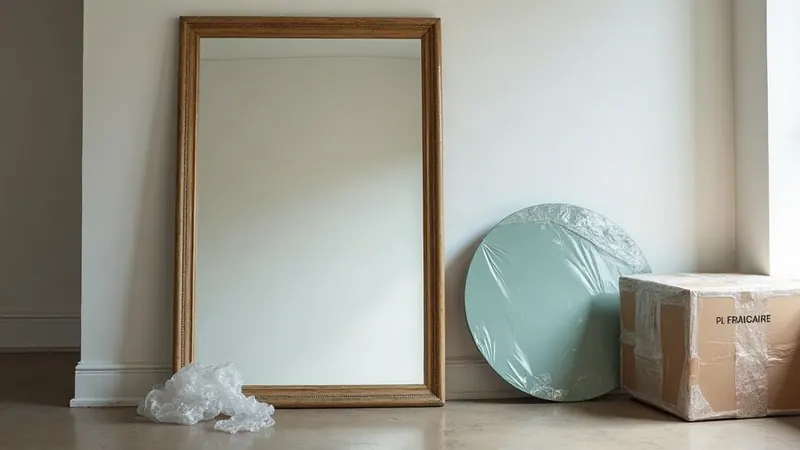
Once removed, apply foam edge protectors to all four corners and wrap the glass sheet in non-abrasive moving blankets, followed by an outer layer of corrugated cardboard or custom-fit picture cartons. Glass panels must be carried and loaded on their edges—never laid flat. Laying a glass sheet flat across a van floor subjects its centre to flex, which leads to structural failure.
Framed Art and Canvases
When art movers in Dubai process paintings and framed prints, they pay close attention to frame corners and canvas surfaces:
- Surface Protection: Cover glass-fronted frames with painter’s tape in a grid pattern to contain shards in the event of frame failure. Canvas surfaces should be covered with glassine paper, which prevents moisture trapping and stops bubble wrap from leaving impression marks on oil paint.
- Corner Shields: Attach cardboard or high-density foam corner guards to every frame.
- Staging: Never stack paintings face-to-face without a rigid layer of cardboard between them. Hardware mounted on the back of one frame can easily puncture the canvas or scratch the glass of an adjacent piece.
- Transport Position: Like mirrors, framed art must travel standing upright along the side walls of the moving vehicle, tied securely with web straps.
Moving Electronics, Computers, and Televisions
Modern electronics contain sensitive circuit boards, delicate screens, and mechanical components that do not tolerate hard drops or sudden shifts.
Televisions and Display Monitors
Large flatscreen televisions are designed to distribute their weight while upright. If a display panel is laid flat, internal glass layers can flex and fracture under their own weight.
Use the original manufacturer packaging whenever possible, as its foam inserts match the panel dimensions precisely. If the original box is unavailable, specialized TV moving boxes with padded foam corner blocks should be used. Keep the television upright during disassembly, wrapping, carrying, and vehicle transport.
Before disconnecting any home theatre or television arrangement, take clear photographs of the rear cable connections. This saves substantial setup time at your new residence.
Desktop Computers and External Hard Drives
When moving fragile items Dubai residents often focus on physical hardware, but data loss is a far greater risk. The honest rule for desktop computers, external storage arrays, and network devices is that your data matters significantly more than the plastic and aluminum housing.
Back up all critical files to a secure cloud service or a portable drive that you carry personally prior to move day. Internal mechanical hard drives contain floating read/write heads that can strike disk platters during rough transit. Remove high-end graphic cards from custom computer towers if possible, as heavy graphics processing units can snap PCIe slots on the motherboard when shaken.
Lamps and Lighting Fixtures
Remove shades, bulbs, and finials before packing lamps. Pack shades separately in clean, paper-lined boxes without heavy objects placed on top of them. Lamp bases should have their cords wrapped neatly around the body and be encased in bubble wrap before being placed vertically into tall wardrobe or utility cartons.
Moving Heavy Fragile Items in Dubai: Marble, Stone, Ceramics, and Instruments
Some of the most frequently damaged items during residential moves are heavy, stone-based furnishings. Weight frequently disguises fragility.
| Item Category | Primary Risk Factor | Required Transport Protocol |
|---|---|---|
| Marble & Stone Tops | Flexing across central span | Transport on edge; dismount bases |
| Large Ceramics | Hairline stress fractures | Deep bottom padding; zero voids |
| Pianos | Internal mechanical shock | Specialist crew; dedicated rig |
| Unusually Shaped Statues | Unbalanced centre of gravity | Custom crating; tie-down straps |
Marble and Granite Table Tops
Stone tops are dense and heavy, leading people to assume they are durable. In reality, marble and granite have low tensile strength and can snap easily across naturally occurring vein lines if unsupported.
Stone tops must be unbolted from their bases and carried vertically by at least two people. During transport, place them on edge against the vehicle’s interior padded walls, supported by rigid timber framing or heavy moving blankets.
Ceramics and Terracotta
Large ceramic pots, garden urns, and decorative stoneware are brittle and prone to hairline cracks. Line transport boxes with heavy foam sheeting, ensure the bottom of the container is thoroughly cushioned, and avoid placing multiple ceramic pieces in the same container without thick divider walls.
Musical Instruments
Pianos, harps, and delicate acoustic instruments require specialized handling. Upright and grand pianos contain intricate mechanical actions, heavy cast-iron frames, and high-tension strings. Moving a piano requires dedicated equipment, including piano dollies, heavy skid boards, and specialized rigging techniques.
When submitting your details on MoversInDubai.org, note any musical instruments explicitly so that candidate companies understand the scope of work before providing estimates.
Oddly Shaped Items
Sculptures, chandeliers, and decorative pieces that do not fit inside rectangular cartons require custom preparation. Fragile item packing Dubai specialists use tailored corrugated cardboard wrapping or build wooden crates directly around the object. The item must be anchored within the crate so its fragile projections do not touch the outer walls.
Managing Dubai Ambient Heat and Temperature-Sensitive Belongings
The climate in Dubai introduces specific hazards for delicate items. During summer months, cargo areas in standard moving trucks can reach elevated internal temperatures quickly when stationary.
Certain household items degrade rapidly in extreme ambient heat:
- Candles and Wax Sculptures: Paraffin and soy wax soften and lose structural shape at high temperatures. Pack these separately and transport them in an air-conditioned vehicle.
- Cosmetics and Perfumes: Heat causes creams to separate and alters perfume compounds.
- Vinyl Records: Phonograph records warp easily when subjected to heat and lateral pressure. Keep vinyl albums stacked vertically in rigid crates and keep them away from unconditioned storage spaces.
- Adhesives and Sensitive Finishes: Vintage furniture polishes, specialized adhesives, and delicate lacquer finishes can soften or become tacky in extreme heat.
- Consumer Electronics: Leaving battery-powered devices or digital screens inside an unconditioned, stationary vehicle for extended periods can damage lithium-ion batteries and display substrates.
Confirm with your chosen moving company how temperature-sensitive items will be handled, particularly if your move involves temporary storage or long transport delays between locations.
Transporting Delicate Lighting Fixtures and Chandeliers
Elaborate designer lamps, crystal chandeliers, and fragile glass pendant lights present distinct packing challenges during a home relocation. Unlike flat artwork or solid glassware, light fixtures feature irregular shapes, delicate glass components, exposed wiring, and stress points that easily snap if subjected to twisting or vibration during transit.
A common mistake is attempting to move floor lamps or hanging pendants fully assembled. Structural joints and glass shades are not designed to withstand lateral movement, which frequently leads to cracked fittings or broken internal wiring. To prevent damage, always disassemble fixtures as much as possible before moving day. Remove glass shades, bulbs, and decorative elements such as hanging crystals. Wrap each component separately in shock-absorbing bubble wrap or clean packing paper before placing them in structured, double-walled boxes with adequate divider inserts.
For complex designer lighting or large chandeliers, take clear photographs of the wiring connections prior to disconnection to simplify reinstallation at your new home. Group small hardware, screws, and crystal hooks into labeled bags attached directly to the main fixture body. The central frame of a chandelier should be suspended or anchored securely inside a rigid crate or heavy-duty box padded with foam or packing peanuts, ensuring the structural arms do not bear direct weight.
When coordinating your move, confirm with your building management whether transporting oversized crates or disassembling permanent light fixtures requires specific access clearances for service elevators or loading bays. Individual property developers and building owners set their own administrative procedures for moving large or heavy items through shared spaces. Systematically dismantling fixtures and isolating fragile glass components ensures your decorative lighting remains protected throughout the journey.
Condition Documentation and Pre-Move Declarations
Preparing fragile items involves clear administration before any packing begins. High-value pieces, antique glass, artwork, and custom furniture should be declared to your selected moving company well ahead of move day.
Take high-resolution photographs of all fragile items before they are wrapped or packed. Capture clear images of:
- The general condition of the item from multiple angles.
- Any pre-existing scratches, chips, or surface blemishes.
- Serial numbers and brand markings on high-value electronics.
- The structural joints of glass frames, stone tables, and antique furniture.
Keep a written inventory listing each fragile item and its designated box number. Label all fragile boxes clearly on multiple side faces—not just the top tape seam—using bold text indicating “FRAGILE” and “THIS WAY UP” direction arrows.
When requesting a quote through MoversInDubai.org, listing your delicate, heavy, or oversized items accurately helps moving providers assess the necessary packing materials, vehicle space, and crew numbers required for your job.
Frequently asked questions
How should a TV be moved?
Upright, in its original box if you still have it, with the cable configuration photographed before you unplug anything. Screens travel poorly flat, and the photograph saves an hour at the other end.
Are glass table tops moved attached to the furniture?
No — they should be removed, wrapped separately, flat-packed with corner protection and carried on edge. A glass top left on a table is one of the most reliable ways to break both.
Should I tell the movers about valuable items in advance?
Yes. Declaring art, antiques, stone tops and high-value electronics before the day is what gets the right materials and crew assigned, and it matters for whatever cover applies. Photograph their condition beforehand too.