
Office Movers in Dubai
An office move in Dubai is primarily an operational downtime challenge rather than a simple logistics job. The objective is to move systems, files, and furniture out of one space and into another without interrupting revenue, client services, or staff productivity. When requesting a quote through MoversInDubai.org, matching your specific operational timeline with experienced commercial movers in Dubai helps preserve business continuity.
Office movers in Dubai minimize operational downtime by scheduling transport during evening and weekend hours, using detailed floor plans to direct every labelled crate to its specific workstation, and coordinating access approvals with building management at both ends of the move.
Managing Commercial Move Schedules to Protect Operating Hours
Every hour your team spends standing in a hallway waiting for desks to be assembled represents a direct financial loss. Commercial moves in Dubai rarely occur between 9:00 AM and 6:00 PM on weekdays. Moving during standard office hours risks blocking building lifts during peak hours, disturbing neighbouring operations, and halting your own workforce.
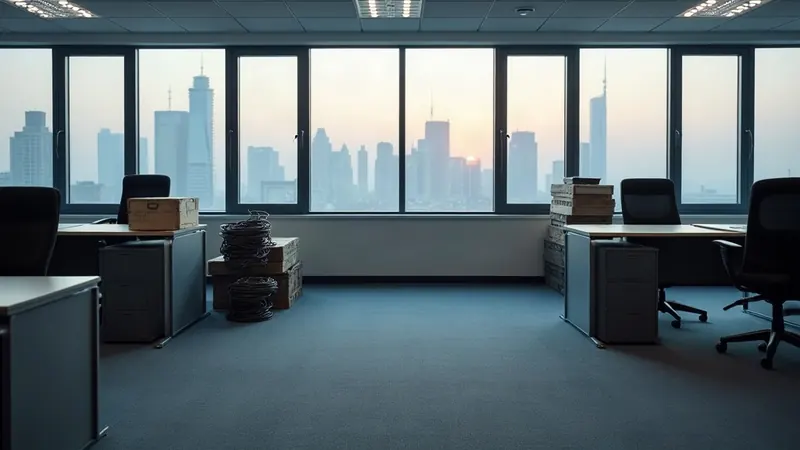
Most office relocation Dubai projects are scheduled across Thursday evening to Sunday night windows. A weekend schedule gives commercial moving teams in Dubai sufficient time to dismantle workstations, wrap boardroom furniture, and transport physical assets when loading docks are clear and road traffic is lighter.
When sending your details for quotes, specify your hard downtime boundary—the exact moment physical operations must pause at your current address and the non-negotiable hour desks must be operational at the destination. This operational window dictates crew sizing, vehicle allocation, and whether the move requires overnight shift rotations.
How Different Office Assets Must Be Packed and Handled
Not everything in a commercial space can be loaded into a crate the same way. A successful business relocation Dubai operation categorizes assets into four distinct groups, each requiring different packing materials, handling methods, and sequence priority.
| Asset Category | Core Packing Requirements | Transit Risk Profile | Placement Priority |
|---|---|---|---|
| Workstations & Seating | Modular dismantling, hardware tagging, bubble wrap for desk surfaces | Surface scratches, lost assembly bolts, frame warping | Secondary (built after layout approval) |
| IT & Server Racks | Antistatic wrapping, padded flight cases, rigid server crates | Static shock, internal board displacement, cable confusion | Primary (must be delivered to data rooms first) |
| Physical Records & Files | Sequential shelf crates, tamper-evident seals, strict security labelling | Out-of-order filing, lost confidential records | Tertiary (unpacked by department teams) |
| Client-Facing Elements | Custom wooden crating, corner protection, heavy-duty padded blankets | Veneer chips, glass fractures, marble cracking | Final (positioned once main clearances are clear) |
Workstations and Ergonomic Seating
Modular office desks, screen partitions, and executive seating represent the bulk of move volume. Modular desks require methodical disassembly, with mounting brackets, screws, and power troughs bagged and taped directly to matching desk frames to ensure rapid reassembly.
IT and Server Equipment
Server racks, network switches, and desktop hardware carry high financial and operational risk. While standard office movers and packers in Dubai transport physical casings, sensitive server internal components require anti-static bubble wrap, specialized foam cushioning, and climate-controlled transport vehicles.
Physical Records and Confidential Files
Legal records, accounting archives, and HR files must retain their exact organizational structure during transport. Professional moving teams use indexed, numbered file crates with tamper-evident security tags so that shelf order is maintained when crates are emptied at the target location.
Reception and Boardroom Assets
Client-facing areas frequently feature high-value items like custom marble reception counters, solid wood boardroom tables, and delicate acoustic wall paneling. These components require custom timber framing, heavy edge guards, and high-density foam blankets to prevent surface damage during stairwell or lift transit.
The Division of Labour Between Office Movers in Dubai and IT Providers
Clear operational boundaries must exist between physical movers and your technology support teams during an office move. Mixing these roles creates ambiguity around hardware accountability and network restoration.
Commercial moving teams focus entirely on physical handling and transit. They provide anti-static wrapping materials, move server racks, carry desktop monitors in cushioned containers, and transport tower units to assigned desks according to floor plans. They do not re-patch network cables, configure server hardware, or manage system software setups.
Your internal IT department or external managed service provider must manage technical operations. Their scope includes:
- Shutting down servers and network switches safely before moving crews touch the hardware.
- Backing up corporate databases and critical local drives.
- Unplugging monitor cables, power bricks, and network cords, placing them in designated server bags.
- Mounting servers back into racks at the new location and connecting main network lines.
When requesting a quote, clarify whether your moving team will handle fully packed IT crates or if they need to coordinate step-by-step handovers with your internal tech team at both premises.
Desk Numbering and Spatial Planning for Day-One Productivity
The single most expensive failure during workplace relocation Dubai operations occurs on the first morning in the new space: employees wandering through corridors looking for their equipment, misplaced file boxes, and desks assembled in incorrect rooms.
Preventing this operational delay requires a systematic labelling structure tied directly to a numbered floor plan.
- Assign a unique code to every workspace: Label every single work area on the layout map (for example, FIN-01 for Finance Desk 1, HR-04 for HR Desk 4).
- Label every piece of physical hardware: Print durable, color-coded tags matching the floor plan. Place individual tags on monitor bases, desktop towers, desk chairs, pedestals, and packed file crates.
- Display master maps at destination entry points: Tape large, clear floor plans to entry doors and open-plan partitions at the new site so movers immediately know where every tagged crate belongs.
- Pack personal items systematically: Supply each employee with two to three heavy crates for personal items and active paperwork, clearly marked with their assigned desk code.
When corporate moving crews in Dubai unload trucks at the new facility, they cross-reference item tags against floor plans, dropping furniture and crates at exact desk allocations without needing constant supervision from your project managers.
Managing Building Access, Permits, and Lift Bookings
Commercial relocation in Dubai involves strict facility management guidelines. Failing to secure proper permissions ahead of time can halt a move at the loading dock, regardless of how well prepared your packing is.
Building access requirements vary significantly across commercial towers and business parks in Dubai. Do not assume procedures at your target destination match the rules of your current landlord.
Loading Dock and Lift Reservations
Many commercial buildings require advance reservations for loading dock bays and dedicated freight lifts. In busy financial districts, loading bays serve entire towers, and access is tightly restricted to specific off-peak windows. Always verify physical clearance heights at loading dock entrances to ensure transport trucks can clear basement ceilings.
Permits and Security Authorizations
Most building management offices require a formal Work Permit or Move-In/Move-Out Approval before crews enter the property. Obtaining these permits usually requires submitting:
- Third-party liability insurance documentation from the moving company.
- Emirates ID copies or trade licence records for all crew members on site.
- A written schedule of moving hours, including overnight access requests.
- A refundable security deposit or signed damage undertaking to protect common areas, corridors, and lift interiors.
Ensure moving crews apply protective coreflute sheeting to elevator interiors, lobby flooring, and main door frames before heavy office moving operations in Dubai begin.
Structuring Phased Moves for Business Continuity
For organizations with large staff counts or multi-floor premises, moving the entire operation in a single window carries elevated operational risk. A phased relocation allows the business to migrate in controlled stages without shutting down client services completely.
A typical phased corporate relocation divides departments based on operational dependencies:
- Phase One (Mid-Week): IT infrastructure, main server rooms, and core network backbones are moved and configured first. This ensures internet, phone systems, and local servers are stable at the target location before general staff arrive.
- Phase Two (Friday Evening): Back-office units like finance, legal, and administration move, allowing two full days for desk assembly and cable routing.
- Phase Three (Saturday/Sunday): Front-line client operations, sales teams, and executive offices migrate last, minimizing interruption to active business communications.
When sending your details through MoversInDubai.org, highlight whether your timeline requires a multi-phase structure. This allows moving companies to assign dedicated project managers and stagger truck dispatches over multiple shifts.
Handling Furniture and Equipment That Won’t Make the Move
Changing office spaces frequently coincides with layout redesigns, hybrid working policies, or updated furniture standards. Consequently, many office moving company projects in Dubai leave behind extra desks, worn ergonomic chairs, excess filing cabinets, or outdated display monitors.
Handling surplus commercial items requires advance decisions before move day arrive. Unwanted furniture left behind in a vacated office space can trigger lease extension penalties or deductions from your original security deposit.
Asset Liquidation and Resale
High-quality modular workstations and branded ergonomic seating can often be sold to commercial office furniture liquidators. Schedule site surveys with secondary market buyers several weeks before the move date so items are cleared out before primary movers arrive.
Eco-Friendly Disposal and Recycling
Items unfit for resale—damaged laminate desks, broken wall partitions, discarded wiring—must be disposed of responsibly. Commercial moving providers can often coordinate transport directly to approved material recovery facilities or commercial waste disposal centers in accordance with local regulations.
Commercial Storage Options
If you are downsizing temporarily or awaiting a secondary fitout phase, surplus assets and archived records can be redirected into commercial storage units. Be sure to note any split-destination needs when requesting a quote so transport routes can be split efficiently between your new building and the storage site.
Frequently asked questions
When should an office move happen?
Almost always outside working hours — an evening or across a weekend — so staff return to a working office. That has to be agreed with building management at both ends, since out-of-hours access and goods-lift booking usually need approval in advance.
Do office movers disconnect and reconnect IT equipment?
Movers typically pack, transport and place IT equipment, but disconnection and reconnection is usually handled by your own IT provider. Agree in writing who is responsible for each step, because this is the single most common gap in an office move.
How far in advance should an office relocation be booked?
Earlier than a home move. Building approvals, lift bookings, IT scheduling and a desk plan all have to line up, and any one of them can move your date. Start the conversation as soon as the new lease is signed rather than when the fit-out finishes.